
Madison Spanier
Criminal Defence Lawyer
Standing with you. Fighting for you.
Madison Spanier completed her undergraduate studies in Criminology and Law at the University of Ottawa. Before attending law school, she supported youth between the ages of 12 and 18 in group home settings. She earned her law degree from the University of Kent in Canterbury, England, and later completed her articling with Paquette Wilhelm in Hamilton. Madison was called to the Ontario Bar in February 2025.
Criminal Law
Legal Offences Serviced

Drug Offences
Possession (simple)
Possession for a small amount of drugs can lead to an arrest, but is not always prosecuted.
Possession for Purpose of Trafficking
Possession of a drug in a quantity beyond what a single person would typically use. There is a presumption of intent to traffic based on the quantity.
Trafficking
Selling, giving, or sharing drugs is trafficking under the law. An exchange of money is not required.

Weapon Offences
Firearms
Possession of a firearm without a licence or authorization is illegal in Canada.
Careless Use & Discharge
Careless use refers to handling a firearm or weapon in a way that poses a risk of harm to others, even if no injury occurs. This also includes improper storage of firearms.
Possession for Dangerous Purpose
Possession of a weapon, including a knife or bear spray, can be criminal if the reason for carrying the weapon is to harm or threaten someone.
Prohibited Weapons
Switchblades, all knives that open with one hand, brass knuckles, tasers, and many firearms are prohibited in Canada.
Concealed Weapons
Carrying a concealed weapon is prohibited unless authorized by permit, or for lawful work or hunting purposes.

Property Offences
Theft
Theft can range from minor incidents like shoplifting to more extreme cases involving high financial loss.
Possession of Stolen Property
A person can be convicted of this offence if they knowingly have property that has been stolen or obtained by fraud, robbery, or other offences resembling theft.
Mischief
Mischief generally refers to intentionally damaging someone else’s property. This offence also includes interfering with the lawful use of property in a way that causes harm or inconvenience to others.

Homicides
Murder
Murder is categorized into first-degree and second-degree in Canadian law. Both carry a minimum sentence of life imprisonment, but parole eligibility differs.
Manslaughter
Manslaughter is the unintentional killing resulting from reckless or negligent behaviour, such as in the case of a deadly accident or altercation.
Criminal Negligence Causing Death
This charge involves behaviour that shows a reckless disregard for the lives or safety of others, and can lead to harm or death.
Failure to Provide Necessaries
This involves the failure of a person to provide basic needs, such as food, shelter, medical care, or other essential support, to someone who is unable to care for themselves. A parent, guardian, or caregiver is typically charged with this offence.

Assault Offences
Assaults
Assault ranges from simple assault (physical contact without consent) to aggravated assault (causing serious injury). Threatening to harm someone, is also an offence, even if no physical harm occurs.
Domestic Charges
Police in Ontario are required to lay a charge if there is an assault between two people who are current or former intimate partners.
Criminal Harassment
Repeated and unwanted behaviours that cause someone to fear for their safety or the safety of someone they know.

Sexual Offences
Sexual Assault
Any form of non-consensual sexual contact is considered sexual assault.
Distributing Intimate Image
This offence was created to address the growing concern over "revenge porn" and other non-consensual sharing of intimate or sexually explicit images. The law focuses on protecting individuals from having intimate images shared without their consent.
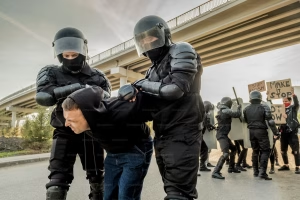
Admin of Justice Offences
Fail to Comply
Failing to comply with a release order and breach of probation are extremely common charges. The charge is laid when someone does not follow the rules of their bail, probation order, or another court order like a peace bond.
Fail to Appear
If you miss a court date, you will be charged with fail to appear. The Crown must prove that you intentionally missed court for a conviction to register.
Obstruct Police
The offence applies in a variety of situations where a person attempts to hinder, delay, or prevent an officer from performing their lawful duties. Providing a false name to police when asked to identify oneself is the most common reason for this charge.

Peace Bonds
Preventative Orders
A peace bond is a criminal court’s equivalent of a “restraining order”. It is a preventative measure meant to ensure peace and safety in a community. There is concern that someone may cause harm in the future, but there is not enough evidence to prosecute a charge.
Youth Charges
All Youth Offences
Criminal charges against youth under 18 are subject to the Youth Criminal Justice Act (YCJA). Canadian law recognizes that young people lack the maturity of adults and focuses on rehabilitation and reintegration.

Don't see your offence?
With You From Start to Finish
What to Expect
Case Evaluation
Initial Consult:
Reviewing disclosure, meeting with you, identifying any potential defences and strategies.
Representation in Court
Court:
Appearing for remand, pre-trial motions, and trial.
Pre-trial Services
Evidence:
Negotiating with the crown, discussing your case with a judge off the record.
Outcomes
Summary of Verdict:
Explain outcome, provide you with all necessary documentation.
Request Consult
Contact Spanier Law
Ready to take the next step?
Book an appointment today and let our team guide you through the process with care and professionalism.